Polaris Dawn: the first commercial spacewalk
Jared Isaacman and Sarah Gillis stepped out into the vacuum in September 2024.
For the first time, private astronauts opened their spacecraft's hatch and leaned out into space in new suits.
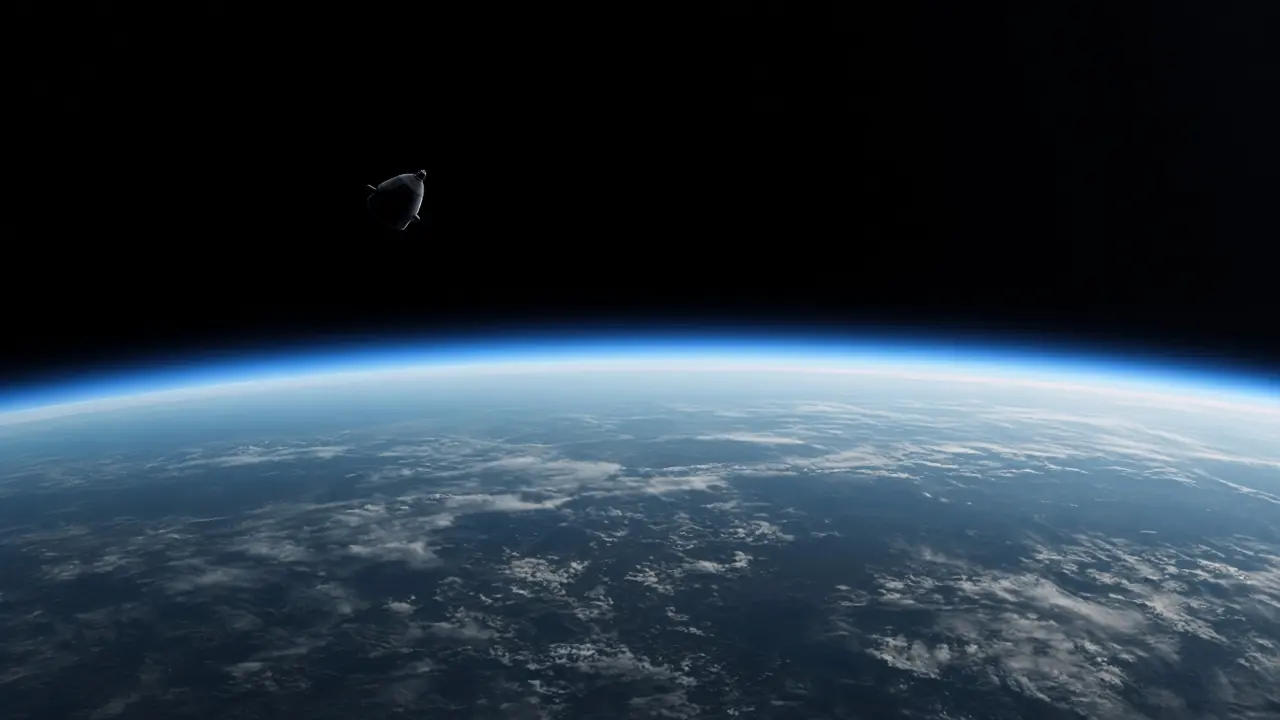
The Polaris Dawn mission, funded by entrepreneur Jared Isaacman and carried out with SpaceX, completed the first commercial spacewalk in history on September 12, 2024. Isaacman and engineer Sarah Gillis partially exited the Dragon capsule.
The main goal was to test a new extravehicular activity suit developed by SpaceX. Because Dragon has no airlock, the entire cabin was depressurized and all four crew members were exposed to vacuum, protected only by their suits.
Earlier, the mission had reached an orbit of 1,408.1 kilometers, the highest for a crewed spacecraft since the Apollo program. In addition to the suit tests, the crew carried out scientific and communications experiments.
The full operation lasted 1 hour and 46 minutes, and the hatch was open for 26 minutes and 40 seconds. Isaacman and Gillis went out for about eight minutes each, while Scott "Kidd" Poteet and Anna Menon stayed inside the depressurized cabin, also in suits, supporting the operation. Their high orbit crossed part of the Van Allen radiation belt, allowing study of radiation exposure.
Key facts
- Spacewalk: September 12, 2024.
- Spacewalkers: Jared Isaacman and Sarah Gillis.
- Maximum orbit: 1,408.1 km, the highest since Apollo.
- First test of SpaceX's EVA suit.
- The hatch was open for 26 minutes and 40 seconds.
The suit data will serve future missions, including SpaceX's plans for the Moon and Mars.
Futurismo newsletter
Get the most futuristic stories in your inbox. Free.
By subscribing you agree to receive emails from Futurismo and our privacy policy. Unsubscribe anytime.Related stories
Artemis II returns to Earth after its trip around the Moon
The four astronauts splashed down off San Diego on April 10, 2026.
Martian dust is gentler than lunar dust, but it has risks
Spacesuit samples aboard Perseverance barely wore down over 1,645 Martian days.
The Swift telescope will fall to Earth after a failed rescue
After almost 22 years hunting cosmic explosions, the NASA observatory is reentering the atmosphere uncontrolled.

The five letters of the genetic code were on asteroid Ryugu
Samples brought back by Japan's Hayabusa2 mission contain all five bases of DNA and RNA.