Shri rapax, the small dinosaur with robust thumbs
A new dromaeosaurid from Mongolia had especially strong hands.
In the Gobi Desert, a relative of Velociraptor turned up with a thumb much more robust than normal.
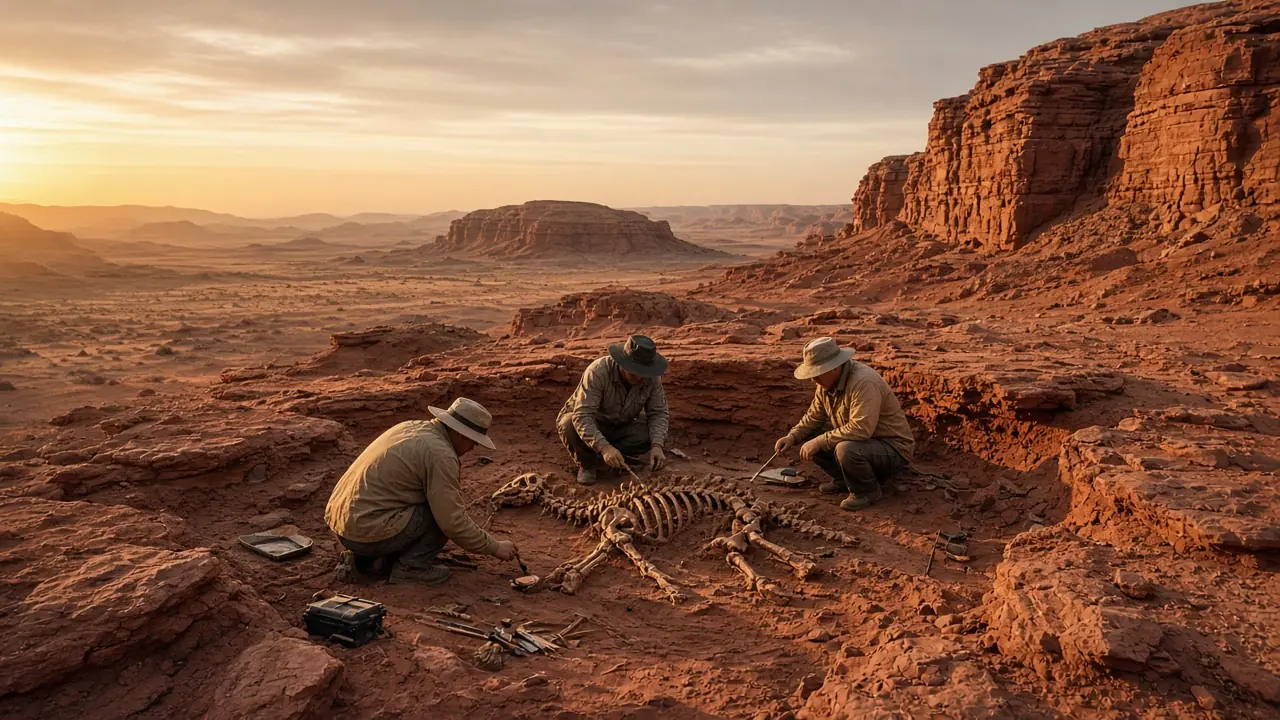
Paleontologists described a new dinosaur species in the journal Historical Biology on July 13, 2025: Shri rapax, a dromaeosaurid, the group of feathered theropods that includes Velociraptor. Its remains were found in Mongolia, in rocks 75 to 72 million years old.
What stands out most is its hand: the thumb is about 150% more robust than in related species. That suggests it used it with great force, possibly to grip prey.
The find shows that Central Asian dromaeosaurids were more diverse than thought and that, in the same environment, different species may have specialized in different ways of hunting.
The paper presents it as a "bird-like" dinosaur and places it in the Campanian Djadokhta Formation, probably at the Ukhaa Tolgod locality, given its exceptional articulated preservation. The authors argue that its extremely robust hands support the idea of niche partitioning among velociraptorines: similar species living together while exploiting different resources. It is a close relative of Shri devi, described in 2021.
Key facts
- Species: Shri rapax, a dromaeosaurid.
- Age: 75 to 72 million years.
- Thumb about 150% more robust.
- Published in Historical Biology on July 13, 2025.
- From the Djadokhta Formation, Mongolia.
New specimens will help explain how it used its hands and how it hunted.
Futurismo newsletter
Get the most futuristic stories in your inbox. Free.
By subscribing you agree to receive emails from Futurismo and our privacy policy. Unsubscribe anytime.Related stories
"Apex," the stegosaurus sold for 44.6 million dollars
It is the most expensive dinosaur fossil ever auctioned; Ken Griffin bought it.
Traces of blood found in a 115-million-year-old dinosaur
A fossil from Brazil preserves structures that look like red blood cells with remnants of heme.
Denisovans survived in Tibet by eating everything
Bones from a cave at 3,280 meters reveal their diet over tens of thousands of years.
The star cluster that is almost as old as the universe
A cluster hidden behind the dust of the galactic center may be 13.4 billion years old.