An AI reveals which dinosaur left each footprint
DinoTracker compares fossil footprint outlines and gets it right like an expert.
A free artificial intelligence app compares any dinosaur footprint with nearly 2,000 tracks and suggests who might have left it.
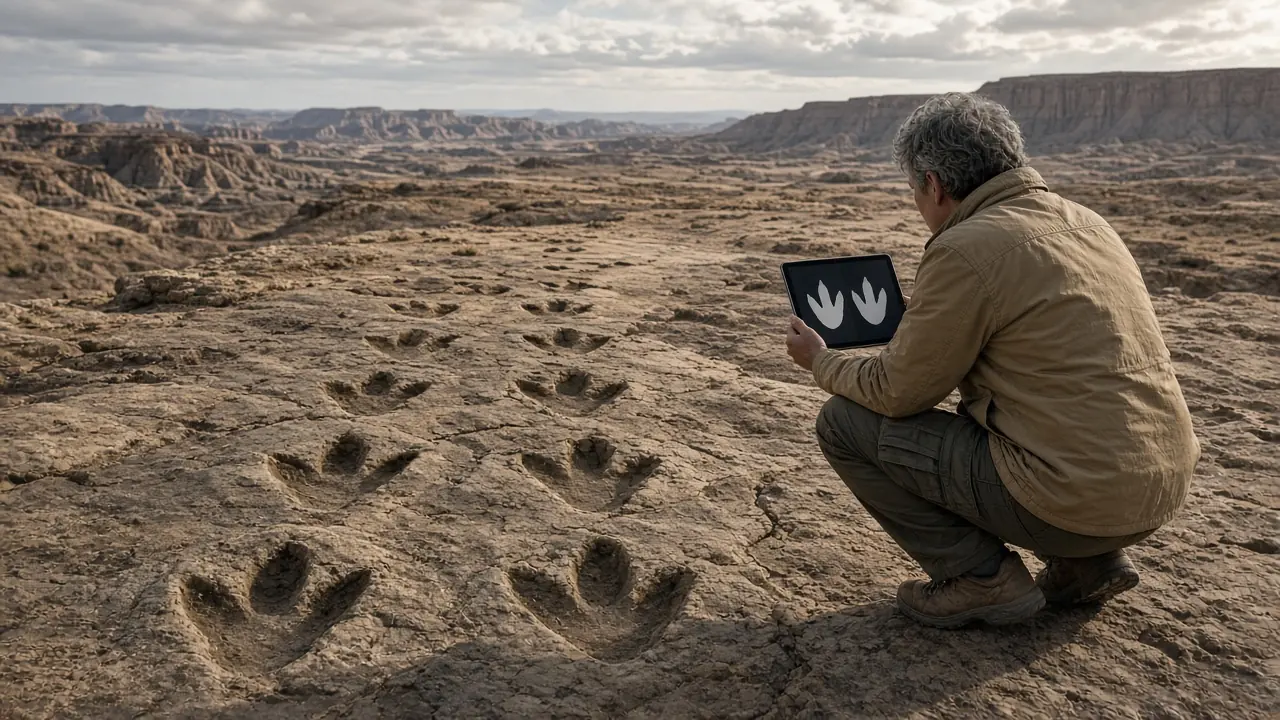
Researchers from the University of Edinburgh and the Helmholtz center in Berlin, including Gregor Hartmann and Steve Brusatte, presented DinoTracker in the journal PNAS. Unlike other methods, its neural network received no prior labels from experts, which reduces bias: it learned on its own from the outlines of 1,974 footprints, including those of modern birds.
The system identified the eight shape features that best distinguish footprints, such as toe spread, heel position and how weight is distributed. The researchers then compared the groups with identifications published by specialists and found 80 to 93% agreement.
The most striking finding: controversial bird-like tracks from the Late Triassic and Early Jurassic cluster with those of birds, and some from the Middle Jurassic with those of ornithopods. That would support an earlier origin for these groups than the bone fossil record shows.
As Hartmann told ORF, the project was inspired by his son, a dinosaur fan since age three.
Key facts
- Database of 1,974 footprints.
- 80 to 93% agreement with experts.
- Runs on Windows, Mac and Linux; a phone version is in the works.
- The code is open source and on GitHub.
The authors propose adapting the method to other fossils and to biological shape problems.
Futurismo newsletter
Get the most futuristic stories in your inbox. Free.
By subscribing you agree to receive emails from Futurismo and our privacy policy. Unsubscribe anytime.Related stories
Denisovans survived in Tibet by eating everything
Bones from a cave at 3,280 meters reveal their diet over tens of thousands of years.
An AI-agent lab that runs DNA experiments on its own
AutoDNA, in Shanghai, designs and executes molecular experiments with minimal human intervention.

The genome of the Greenland shark, the longest-lived vertebrate
Its DNA reveals clues about how it can live around four centuries.
Homo erectus fossils recovered from the seafloor in Indonesia
Remains dredged from the Madura Strait reveal a land now underwater.