The genome of the Greenland shark, the longest-lived vertebrate
Its DNA reveals clues about how it can live around four centuries.
It swims slowly in icy waters and could live about 400 years. Now its complete genome is starting to explain how.
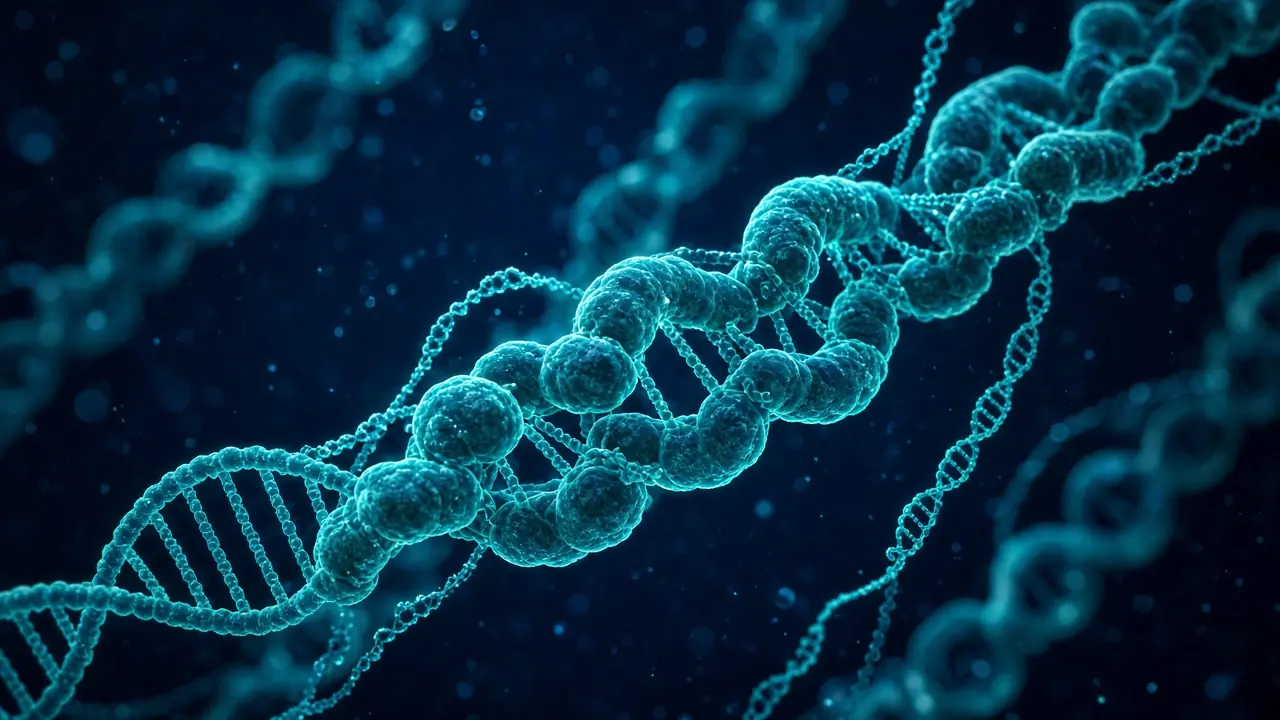
The Greenland shark is the vertebrate with the longest known lifespan: earlier studies estimated about 392 years, with a margin of ±120. A team including the University of Tokyo sequenced its genome and published the results in PNAS in 2026, after a preliminary version on bioRxiv.
The challenge was huge: its genome is about 5.9 billion base pairs, nearly twice the human genome, and the assembly reached 96.7% completeness. Analyzing it, the researchers found striking features in genes related to cell maintenance.
Notable among them are changes in histone H1.0, a protein that helps package DNA, and 59 copies of the FTH1b gene, linked to iron handling and protection against oxidative stress. These findings suggest mechanisms that could contribute to its longevity, although they are still hypotheses to be tested.
The study also identified expanded gene families related to the immune system, cancer resistance and DNA repair. An earlier work, posted as a preprint in 2024 by another team, had already described a genome dominated by transposable elements—"jumping genes"—and duplicated genes linked to DNA repair. That suggests gene duplication expanded its repair capacity.
Key facts
- Estimated age: about 392 years (±120).
- Genome of about 5.9 billion base pairs.
- Assembly 96.7% complete.
- 59 copies of the FTH1b gene.
The genome will serve as a basis for studying aging in very long-lived species.
Futurismo newsletter
Get the most futuristic stories in your inbox. Free.
By subscribing you agree to receive emails from Futurismo and our privacy policy. Unsubscribe anytime.Related stories
The secret of the whale that lives over 200 years lies in a protein
The bowhead whale repairs its DNA better than any other mammal.

Scientists turn colon cancer cells into near-normal cells
A KAIST team managed to "reverse" cancer in the lab without killing the cells.
An AI reveals which dinosaur left each footprint
DinoTracker compares fossil footprint outlines and gets it right like an expert.

An AI-agent lab that runs DNA experiments on its own
AutoDNA, in Shanghai, designs and executes molecular experiments with minimal human intervention.