Mars is not dead: a giant volcano is still exhaling gas
The Trace Gas Orbiter detects hydrogen chloride over Alba Mons, a sign of ongoing igneous processes.
For decades Mars was called a geologically dead planet. An acrid gas over a continent-sized volcano suggests it is only dormant.
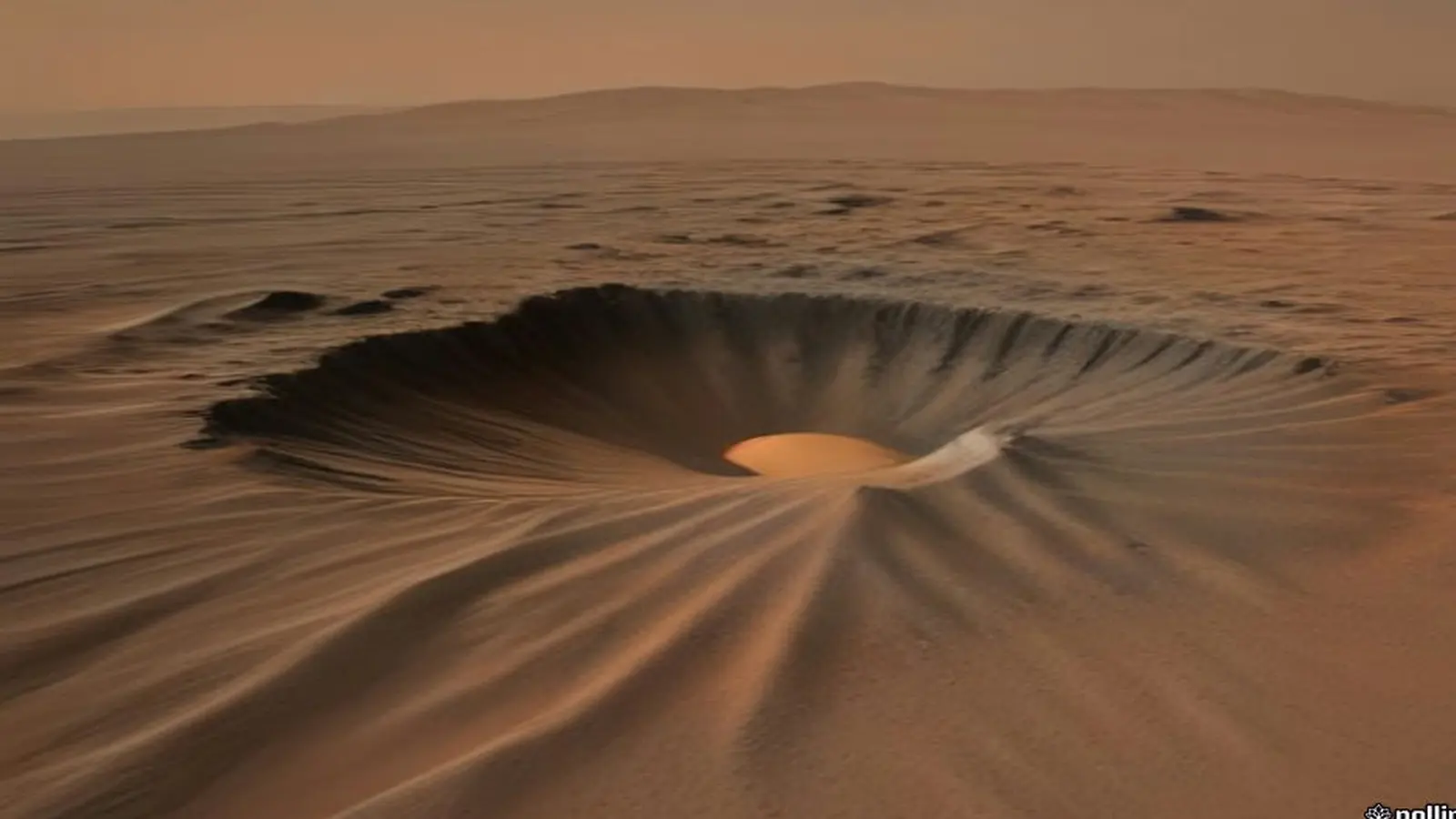
A study published on November 4, 2026 in Science Advances analyzes data from the Trace Gas Orbiter (TGO) of ESA's ExoMars mission. The team detected hydrogen chloride (HCl) in the Martian atmosphere during the cold aphelion season, concentrated over the Alba Mons region, the planet's most extensive volcano by area, in the Tharsis volcanic province.
On Earth, HCl escapes from magmatic vents. On Mars, much of the seasonal HCl is explained by atmospheric chemistry with dust and water. But these localized aphelion detections, unexpected and confined to Alba Mons, fit better with seepage from the interior. Images from HiRISE, CaSSIS and CTX show fresh, narrow fissures — sometimes less than a meter wide — that could be pathways to magmatic bodies at depth.
This is not an eruption seen live, nor flowing lava. The authors describe ongoing igneous processes: an interior that still holds heat. Local HCl seepage estimates are under about 3 kg/s, comparable to the low end of terrestrial volcanoes. If active hydrothermal systems sit under those fissures, they would be priority sites in the search for habitable niches.
Key facts
- Published in Science Advances on November 4, 2026.
- Instrument: Atmospheric Chemistry Suite on TGO (ESA).
- Alba Mons is about 600 km across; the largest volcano by surface area.
- Local HCl detections were seen across several Martian years.
Mars puts on no lava show, but its interior still pushes gas into the sky.
Futurismo newsletter
Get the most futuristic stories in your inbox. Free.
By subscribing you agree to receive emails from Futurismo and our privacy policy. Unsubscribe anytime.Related stories
K2-18b: the signs of life that still don't convince
James Webb hinted at molecules linked to life, but later reanalyses don't confirm them.
An algorithm uncovers a hidden planet in JWST data
FLIP boosts sensitivity up to 15 times by removing star glare and recovers 51 Eridani b.
A theorem strengthens the case that the universe had a beginning
Raphael Bousso extends a singularity theorem into the quantum realm.
The continents are drying at an alarming rate
A satellite-data study shows Earth has been losing freshwater since 2002.